
The Future of Mobile AI Agents: Your Phone as a Personal Assistant
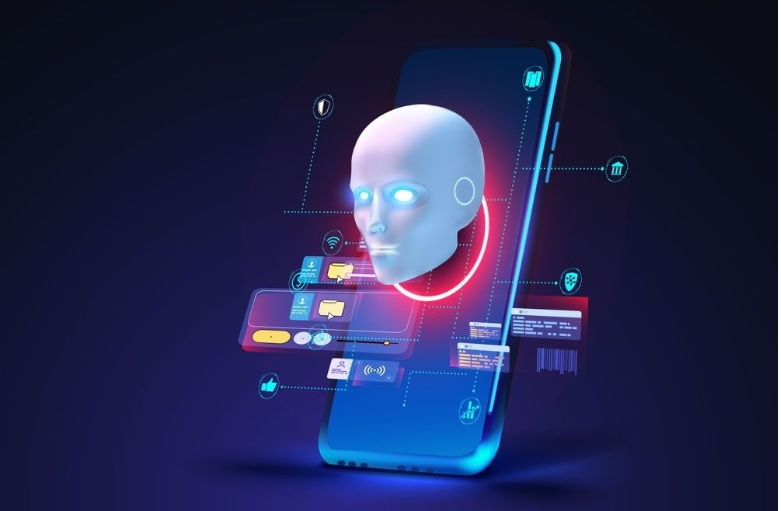
The Future of Mobile AI Agents: Your Phone as a Personal Assistant
 Samir Luitel
The world of mobile technology is on the brink of a revolution – artificial intelligence shifts from a distant probability to a main working tool. Smartphones no longer act as a simple communication tool but evolve into an intelligent device that understands, predicts the user’s needs, and acts accordingly. As AI agents grow smarter, they will change the paradigm of human interface with digital devices, serving as a link between the user’s thoughts and actions and the machine’s efficiency. The opportunity certainly does not go unnoticed by any AI development company, as they strive to create the new generation of personal assistants that will live directly inside the user’s phone.
Table of Contents
The Rise of Intelligent Mobile Companions
The Rise of Intelligent Mobile Companions Indeed, the era of mobile AI agents is already among us, in forms of Siri, Google Assistant, and Alexa, but their potential is just starting to awaken. The future is fully personalized and context-aware intelligence, which is also proactive – these agents will not fully rely on voice commands and independent queries but will instead act on behalf of the user, predicting their future needs and making decisions for them. This intelligence, therefore, represents a direct extension of the user, learning their own habits, preferences, and mood over the time. Key advancements in natural language processing, machine learning, and edge computing allow future AI assistants to perform even most complex tasks without sending them to the cloud first. As independent on-device AI models, they can considerably reduce the user’s dependence on constantly available internet, hence increasing the functionality and applicability of a mobile assistant.
Industries and workflows transformation.
The impact of mobile AI agents will go far beyond personal use- they will redefine industries and professional working environments as well. In healthcare, mobile AI assistants will monitor patients’ uploaded vital signs, remind them to take necessary medications and notify the doctor about a suspected anomaly. In education, they will act as tailor-made tutors, changing, and adapting learning materials to suit each individual’s pace. AI-driven mobile assistants in businesses will help automate scheduling, communication, and task operation to improve productivity by a margin. Professional leaders who hire AI developers in India to design unique mobile agents will have a significant competitive edge as they will be customized to fit the organization’s workflows. The future shrinks with the integration of AI in mobile computing to enhance efficiency and customer involvement and innovation in all sectors.
Contextual awareness will make AI personalization a reality.
Moreover, in the future, mobile assistants will not only respond to the user’s query but analyze the location, time of day, user’s plan, and mood to answer. For example, instead of setting a reminder, the phone can recommend leaving a little earlier for a meeting since there might be a traffic jam or rain.
Such accurate suggestions are possible because diverse AI models work together to create an awareness web. E-motion recognition, gesture understanding, speech tone-reading, sensor-based behavior tracking, and other capabilities make the AI companion feel personal. As companies adopt advanced generative AI development services, this level of intelligence will become more refined, allowing users to communicate with their gadgets as with trusted friends. The rapidly increasing intimacy between human intuition and machine consciousness allows users to communicate with their gadgets as with trusted friends.
A similar emphasis on on-device intelligence model processing will protect user privacy. User-sensitive data collection, storage, and processing by greedy tech companies have been a major obstacle to AI adoption. However, good news – the next generation of mobile appliances will have most of the necessary things. Apple and Google have already developed the appropriate software frameworks to secure their products and safeguard users from their data being used against them.
These instruments will ensure that users receive customized support without compromising data privacy. Edge computing combined with federated learning can help AI become even less intrusive by minimizing the need for independent data processing. These systems can analyze comprehensive user data while never assessing or storing identifying information.
Emotional Intelligence and Human-Like Interaction.
However, to become truly effective as personal assistants, mobile AI agents must exceed functional intelligence and acquire emotional intelligence. In the future, AI systems will be able to determine your tone, sentiment, or even emotion. This aspect can instill a sense of intuition that can be used to support connections. For example, a user’s companion AI can hear force when the person is conversing and decide to tell him that he should rest for some time before they do so. This can also influence the user before he or she does a presentation or wishes by merely sending a message. As a result, AIs may engage humans less as robots and much more comparable to their best buddies. AI agents may design responses that seem very much person-like if human-like feelings may be simulated from facial expressions, body modulation, and text characteristics using affective computing. Since the step would alter human’s understanding of AI and make it feel more confident and competent, it would certainly be a lot more significant than simply being a resource.
Integration Across Devices and Ecosystems.
Finally, the third trend in developing mobile agents is integration across devices. In the future, AI assistants will not be confined to smartphones: they will integrate with wearables, smart-home devices, vehicles, and augmented reality interfaces.
Autonomous decision-making.
The future mobile AI agents are not limited to user commanding but to taking actions based on the provided information. By integrating predictive analysis with reinforcement learning, these systems can perform real-time actions by interpreting user intent or object-based interactions. This evolution is especially impactful for AI agents for small businesses, as it enables automated decision-making, faster responses, and smarter operations without constant human intervention. Smartphones will cease to be receivers to resilience to collaborators. For illustration, your AI assistant will adjust your schedule in case of burnout to create an open time when it realizes that you have to work overtime as previously. It will also compile a list of household needs and order them upon exhaustion. They will improve their decision-making capabilities from continuous learning.
Challenges and ethical considerations
Despite their great potential, the development of mobile AI agents is associated with several pressing challenges. Issues such as data ownership, transparency, and algorithmic bias are ethical concerns. The developers should ensure that AI agents generate fair and explainable decisions and behave in a manner consistent with the users’ rational judgments. Additionally, the use of unlimited datasets raises questions ranging from digital consent and access to an equal share of AI benefits. The solution to these issues involves the establishment of global standards of accountability in AI projects. Users should control their data subject to elimination or modification of privacy parameters. AI should balance with humanity advanced with ethical standards of innovation. This way, the developers will create a strong and trustworthy relationship between the AI agents and the broader society.
Similarly, companies offering white label SEO services must also follow transparent and ethical data practices, ensuring that all digital operations respect privacy, fairness and accountability while delivering measurable value.
A new era of human-AI synergy
Mobile AI agents mark the beginning of a new era. What’s surprising about this new era is that mobile AI functionalities make human and machine intelligence coexist in absolute harmony. Today’s mobile AI that is more intuitive, emotionally aware, and autonomous redefines mobile ownership. No available smartphone is a useful tool or a gadget anymore. All phones offer personal assistants capable of understanding every aspect of human life and making every dream a reality
Mobile AI not only accelerates human activities but also smartens up human beings to a healthier and more productive life. This paradigm shift is already happening. Technology is evolving, and as long as this trend continues, the line that differentiates how humans think and how AI systems operate will keep becoming thinner and thinner. Hence, we are about to witness the most personalized and indispensable decision-making process from the smartest personal assistant that ever lived, a smartphone.



 WhatsApp Spy
 Facebook & Messenger Spy
 Viber Spy
 Instagram Spy
 Skype Spy
 TikTok Spy
 Telegram Spy
 LinkedIn Spy
 Twitter Spy
 Youtube Spy
 Photo Spy
 Video Spy
 Calls and Contacts Tracking
 SMS & IM Chats
 Voice Capture
 Image Capture
 Video Record
 Monitor Contacts
 Monitor Location
 Monitor Device info
 Monitor and Add Geofence
 Monitor Photos
 Monitor Videos